

It’s been 10 years since UK Biobank completed the first full body image scan of one of our amazing participants.
Since then, over 85,000 participants have contributed to this world-leading project, driving us towards the target of collecting detailed images of the brain, heart, lungs and more of 100,000 volunteers. This study is providing researchers with an unprecedented insight into how the body ages, allowing scientists to reveal what’s happening when things start to go wrong.
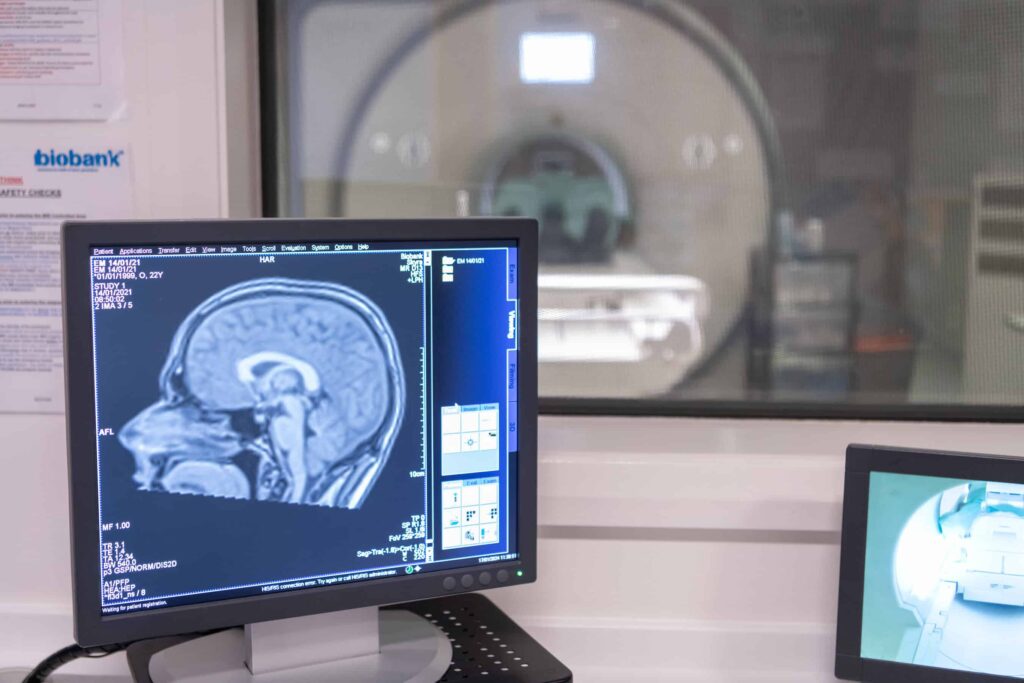
To mark this anniversary, we’ve chosen 10 research highlights which showcase work carried out by our global scientific community using UK Biobank imaging data.
These 10 examples of fantastic research coming out of UK Biobank’s imaging data are just the tip of the iceberg. With the addition of the world’s largest set of imaging scans from tens of thousands of our volunteers, our dataset is more useful than ever to scientists. From looking into how childhood trauma affects the brain, to understanding the health impacts of how fat is stored around our organs, there are huge possibilities to do novel large-scale research using imaging data in UK Biobank. I can’t wait to see what the next ten years will bring.
Professor Naomi Allen, Chief Scientist of UK Biobank

Understanding the predictors of heart health
This study shows that the layer of fat surrounding the heart can impact its structure and function. Heart images from UK Biobank were used to demonstrate that this surrounding layer of fat, known as pericardial fat, was linked to unhealthy changes in the heart. This was seen in both obese and non-obese people, showing that potentially dangerous fat can lurk within any body size.

Tailoring measurements of heart health
Another project looking closely at the heart explored how heart structure and function varies between White European and South Asian participants. Researchers found differences in the mass and wall thickness of people’s left heart chambers between the two ethnicities. The findings emphasise that measures of heart health differ in different population subgroups.

Heart-brain connections
Researchers used our MRI data to investigate the relationship between heart and brain health, knowledge which is crucial for our understanding of conditions like stroke and dementia. They found that heart health has direct impacts on brain health. For example, a thicker left ventricle of the heart was associated with an increased risk of stroke, and these links were found to be genetic. Further exploration into how our genes influence these heart-brain connections – and associated disorders – will help to predict risk of disease so that potential treatments can be given earlier.

The impact of diabetes on the heart
A study has revealed that diabetes causes subtle structural changes to the heart. People with diabetes were found to have smaller heart chambers, and thicker left ventricle walls compared with those that didn’t have diabetes. These findings could help to detect heart damage early in people with diabetes to ensure that they are provided timely treatment.


Identifying hip osteoarthritis
Bone density scans, known as DEXA scans, are usually used to diagnose osteoporosis. However, research has shown that they can also accurately identify the presence – and severity of – osteoarthritis of the hip. Higher grades of osteoarthritis were linked to greater hip pain and likelihood of replacement, showing the potential for these types of scans to be used in clinical settings to help diagnose hip osteoarthritis.
Stopping the clock on organ ageing
Scientists have revealed that a specific organ’s ‘biological age’ can influence the ageing of other organ groups. For example, if someone’s lungs appear older than their actual (chronological) age, it’s more likely that their other organs – like their heart or brain – will appear older too. An increase in the biological age of a person’s organs is strongly associated with a heightened risk of many chronic diseases. This research might help to identify people at risk of age-related diseases earlier than has previously been possible.

Connectome-ing it all together
Researchers have used our brain MRI scans to create the largest ever set of comprehensive maps detailing all of the neural connections in the brain – known as ‘connectomes’. Strikingly, this took 200,000 hours (nearly 20 years!) of computing time to complete. For each individual in the study, 28 versions of structural and functional brain networks were mapped. It is anticipated that this new resource of ‘wiring diagrams’ of the brain will lead to new studies of the human connectome in health, disease, and ageing.


The impact of COVID-19 on the brain
Body scan images from UK Biobank participants before and after COVID-19 infection have been used to reveal the impact of the virus on our organs. They found that even mild infection with the virus that causes COVID-19 (SARS-CoV-2) results in physical changes to the brain – such as tissue damage and greater shrinkage in brain areas related to smell. This study highlights the benefits of repeat imaging, enabling researchers to analyse scans from the same participant and see what’s changed over time.

COVID-19 and changes in lung volume
Another UK Biobank-based COVID-19 study aimed to assess the effect of the virus on organ health. It found that lung volume decreased in participants that had COVID-19, with no effects on the liver, kidney or pancreas. Whilst most cases of COVID-19 in this group had mild symptoms, this study contributes to understanding the impact of this virus on internal physiology. Visceral fat, which surrounds abdominal organs, was also found to be the most important contributor to disease severity.
Stress on the brain
Brain images and lifestyle questionnaire data from UK Biobank were used to research the impact of childhood trauma on the structure of the brain later in life. The study found that women who experienced childhood trauma had differences in the structure and connectivity of different parts of the brain compared to those who did not experience trauma. This might shed light on the mechanism through which childhood trauma may lead to changes in cognitive performance and mental health problems.


Be part of the world’s largest whole-body scanning project to transform the way we diagnose, prevent and treat our most chronic diseases.
Related news

Scientists will use images from the world’s largest whole-body scanning study to see how people’s brains, hearts, abdomens and bones have aged and accelerate research into the diagnosis, treatment, and prevention of our major diseases.
UK Biobank’s Principal Investigator, Professor Sir Rory Collins, has today become the 60,000th volunteer to take part in the world’s largest internal organ imaging study.

The collection of whole-body repeat imaging scans of 60,000 UK Biobank participants will provide researchers with a unique set of longitudinal measures to understand the determinants and progression of disease in mid-to-later life.