
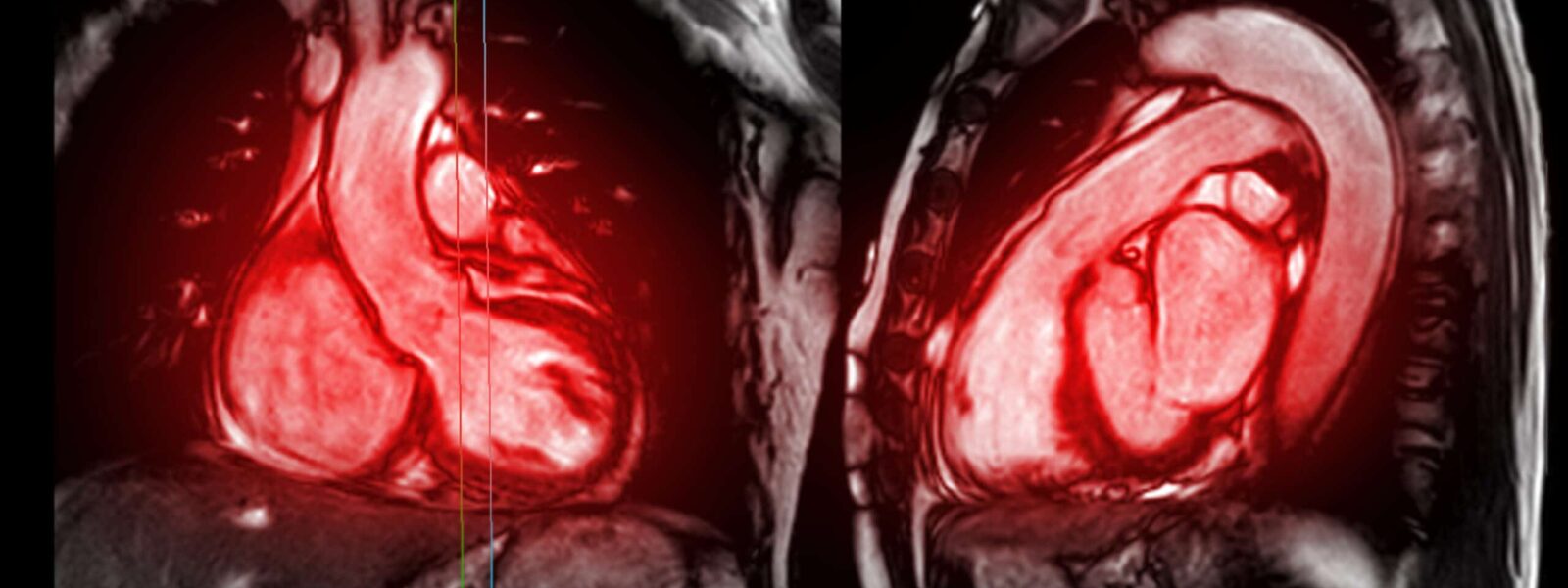
There’s a hidden link between the health of the heart and the brain, scans from more than 40,000 UK Biobank participants suggest.
Summary
If the heart appears unhealthy, chances are that this is mirrored by problems in the brain. This heart–brain link was revealed with scans from more than 40,000 UK Biobank participants. It suggests that preventing cardiovascular conditions could also benefit the brain, and hits at a more holistic way in which clinicians could predict someone’s risk of multiple diseases.
Unhealthy changes in the heart are linked to brain structure problems, scans from more than 40,000 UK Biobank participants have revealed. This suggests that preventing heart conditions, or treating them as early as possible, could also keep the brain healthy.
If we realise that diseases have connections across different organs … we can train a [generalisable] model. I think there’s a long way to go to very precise clinical prediction, but technology changes quickly.
Professor Bingxin Zhao, University of Pennsylvania, US
Eventually, understanding the intricate connections between all our organs could allow forecasting someone’s risk of multiple diseases all at once, rather than just a one at a time.
“At the moment, if we want to predict disease one, we just build a model for disease one,” explains study co-leader Bingxin Zhao from the University of Pennsylvania, US. “And if we want to predict disease two, we just build a model for disease two. But if we realise that diseases have connections across different organs … we can train a [generalisable] model. I think there’s a long way to go to very precise clinical prediction, but technology changes quickly.”
Untangling connections
The link between cardiovascular conditions and certain brain conditions is already well known. For example, depression is common among people with hypertrophic cardiomyopathy, a thickened heart muscle, and heart failure is linked to dementia. Both conditions decrease the heart’s ability to pump blood, including to the brain.
It remains unclear whether these connections are innate or whether the stress of having one medical condition contributes to developing another. To start untangling this question, Zhao and his team analysed more than 80 heart characteristics and more than 450 measures of brain structure and function.
The researchers found, for example, that less healthy heart chambers are linked to poorer ‘wiring’ in the brain. This means the white matter, which connects different parts of the brain, doesn’t appear as it does in a healthy person.
Holistic understanding of diseases
DNA data from UK Biobank participants revealed that some of the same genes affect both the heart and the brain. This suggests that certain heart medications could also help people with brain disorders, says Junhao Wen from Columbia University, US, who has recently revealed a brain–heart–eye link.
He calls Zhao’s study “terrific”, adding that it’s the first that comprehensively links brain and heart scans, as well as genetic information – something that wouldn’t have been possible without UK Biobank data.
In traditional Chinese medicine, we have known about this connection [between organs] for a thousand years, but I feel it’s somehow less emphasised nowadays in the typical clinical setting.
Professor Bingxin Zhao, University of Pennsylvania, US
“I don’t think there are any surprising results that could directly affect patients for now,” Wen adds. “But as a scientific community, there is a lot to do on top of this.” For example, creating organ-ageing clocks, which could help clinicians better estimate someone’s risk of age-related conditions.
Zhao, who also recently investigated links between the eye and the brain, suggests revealing organ–organ connections could lead to a more holistic understanding of diseases. “In traditional Chinese medicine, we have known about this connection [between organs] for a thousand years, but I feel it’s somehow less emphasised nowadays in the typical clinical setting,” he says.
Related publication
- Science, June 2023