
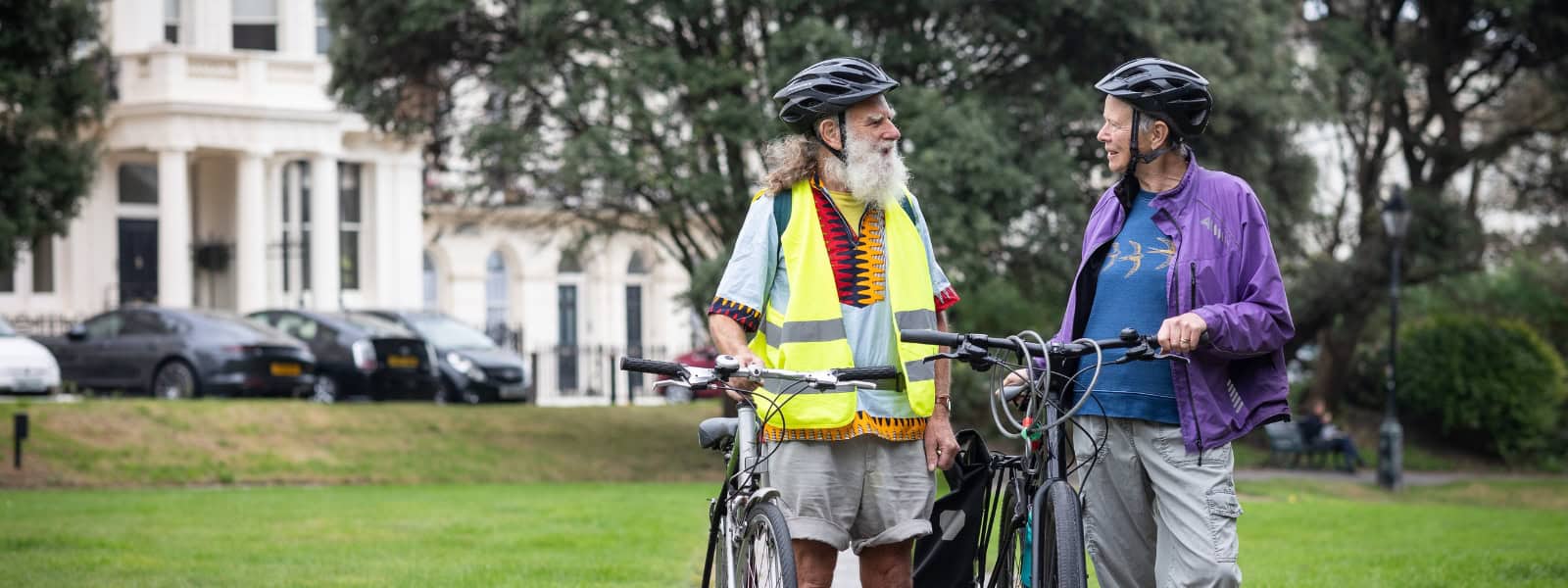
UK Biobank participants’ activity data suggest that our ‘one size fits all’ exercise guidelines need an overhaul.
Summary
Women need about four hours of exercise per week to lower their heart disease risk by 30% – compared with nearly nine hours for men. The results, which come from more than 85,000 UK Biobank participants’ activity-tracker data, suggest that tailored exercise recommendations are urgently needed.
Women only need half as much exercise as men do to get the same heart-health benefits, activity-tracker data of more than 85,000 UK Biobank participants have revealed. This shows that our ‘one size fits all’ activity guidelines aren’t fit for purpose, and we urgently need tailored approaches, wrote cardiologist Emily Lau from the Massachusetts General Hospital, US.

Data were collected from 85,000 UK Biobank participants who wore an activity-monitor ‘watch’ for a week.
The NHS recommends at least 150 minutes a week of moderate-intensity activity, such as brisk walking, or 75 minutes of vigorous activity, such as running. Questionnaire answers had already hinted at the fact that women get more heart-health benefits out of the same amount of exercise than men do – but results based on people’s potentially flawed memory aren’t always reliable.
Striking sex differences
More objective data from the 85,000 UK Biobank participants who wore an activity-monitor ‘watch’ for a week have now confirmed this. Women needed on average about four hours of exercise per week to lower their heart disease risk by 30% – compared with nearly nine hours for men.
Understanding how these findings apply to a more racially diverse and socioeconomically disadvantaged population will be imperative in the future, given their higher burden of cardiovascular disease.
Dr Ersilia DeFilippis, Columbia University, US
Among people who already had coronary heart disease, women who did the recommended amount of weekly exercise had a 70% lower risk of premature death than their less active counterparts. For men who stuck with the recommendation, it was only a 20% lower risk.
Since most UK Biobank participants are white European, relatively well-off and generally healthy, “understanding how these findings apply to a more racially diverse and socioeconomically disadvantaged population will be imperative in the future, given their higher burden of cardiovascular disease”, cardiologist Ersilia DeFilippis from Columbia University, US, told New Scientist.
What gives women the edge?
This highlights an opportunity for the medical community to think about how we can tailor our recommendations to women.
Dr Emily Lau, Massachusetts General Hospital, US
What’s behind these striking sex differences isn’t clear yet. The researchers behind the work suggest that women’s higher levels of oestrogen (before menopause) could help to break down more body fat during exercise. Another reason could be that women tend to have more of the muscle fibres that specialise in endurance, which might help women’s bodies exercise more efficiently.
“Women appear to have a physical activity advantage,” Lau told Time. “Yet we see time and time again that women are less physically active and less likely to achieve the recommended physical activity targets. This highlights an opportunity for the medical community to think about how we can tailor our recommendations to women. Because what we are doing now is not quite working.”

