

Data from 39,000 UK Biobank participants reveal how genetic variations that influence the size of brain structures also increase the risk for Parkinson’s and ADHD.
Summary
The genes that help to shape structures in the ‘deep brain’ – responsible mostly for unconscious processes such as breathing – also play a role in conditions such as ADHD and Parkinson’s disease. This is what researchers found who analysed brain scans and genetic data from nearly 75,000 people, including 39,000 UK Biobank participants. The knowledge could eventually allow doctors to identify people who are likely to develop certain neurological conditions and support them long before symptoms appear.
The genes that influence the size of structures in the ‘deep brain’ – responsible mostly for unconscious processes – also play a role in conditions such as attention deficit hyperactivity disorder (ADHD) and Parkinson’s disease. Insights like this could eventually allow doctors to identify people who are at high risk of developing these diseases and support them long before symptoms arise.
Credit: Zuriel Ceja
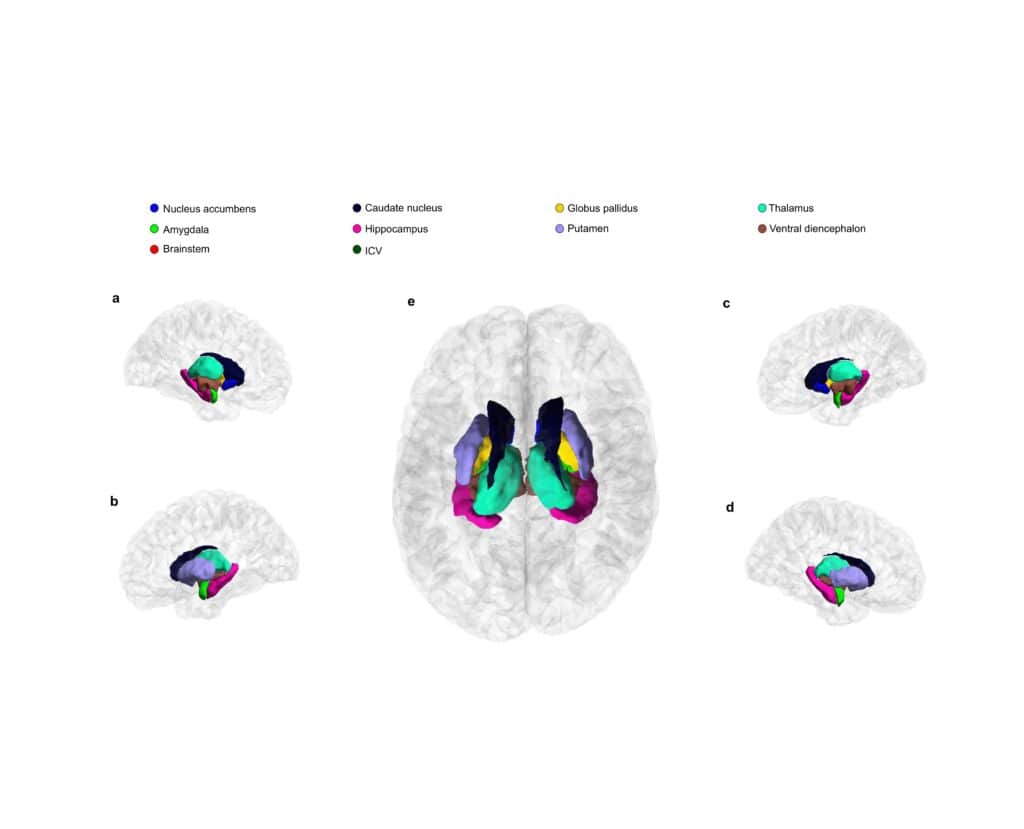
Almost 200 researchers came together to analyse brain scans and genetic data from nearly 75,000 people, including 39,000 UK Biobank participants. They discovered hundreds of genetic variants that influence the volume of parts of the deep brain responsible for processes such as breathing and memory formation.
Many of these genetic variants are also linked to an increased risk of neurodegenerative and neurodevelopmental diseases, including Parkinson’s and ADHD. For example, genetic variants that lead to a larger putamen, a brain structure that regulates movements among other functions, are associated with Parkinson’s disease. Genetic variants that lead to some structures being smaller – including the brain’s ‘body functioning control center’, the hypothalamus – are linked to a higher risk of developing ADHD.
The potential for disease prediction
While we are born with a set of genes that we cannot change, the one thing we can change is our lifestyle choices. A healthy diet and lifestyle will benefit our brain despite our genetic profiles.
Dr Miguel E. Rentería, QIMR Berghofer, Australia
Miguel Rentería, who led the study, theorises that the genes are activated before we are born, to help to establish our brain structure. As we age, they start to play a different role and, in a small number of people, increase the risk for certain diseases. Why this apparent switch happens, and how exactly the genes influence disease risk, needs further exploration.
Rentería suggests that the research “will allow us to make predictions about brain structure and to detect significant deviations from those predictions, which might tell us that there’s a chance of a person developing a particular disease”. This will be particularly valuable if it can be done long before symptoms develop, by which time it can become difficult to treat the disease.
“While we are born with a set of genes that we cannot change, the one thing we can change is our lifestyle choices,” Rentería adds. “A healthy diet and lifestyle will benefit our brain despite our genetic profiles.”
Related publication
- Nature Genetics, October 2024