
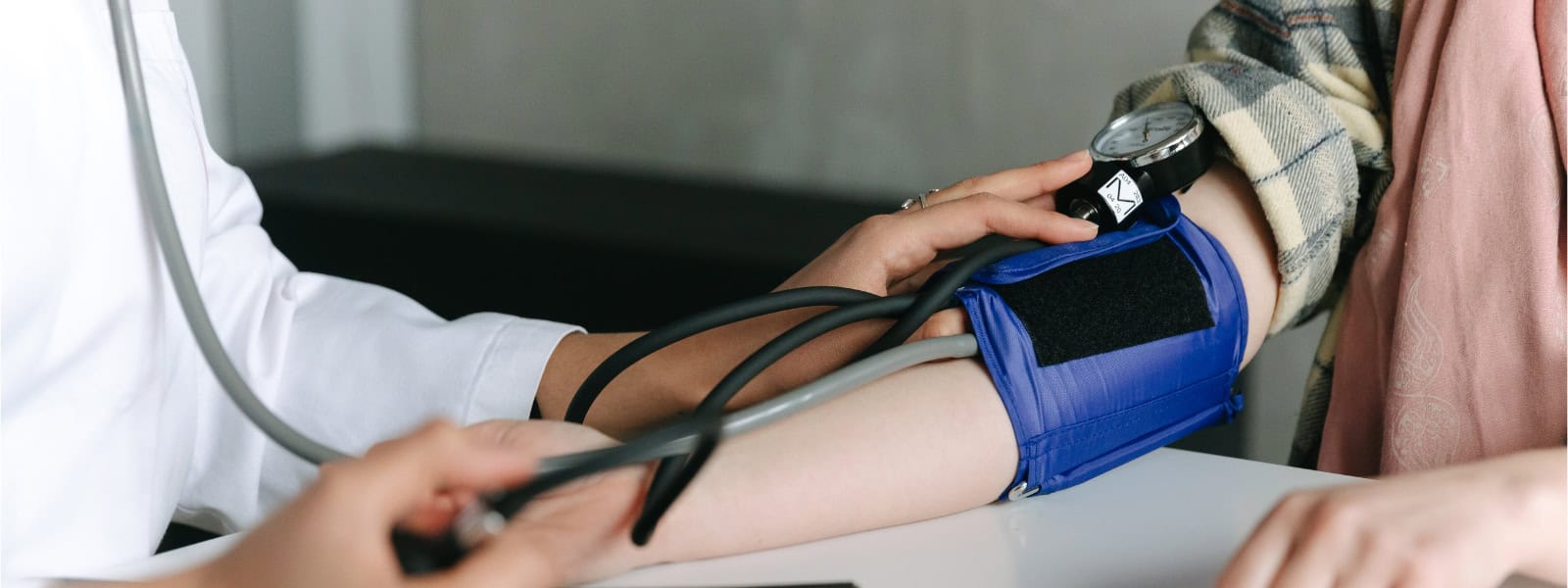
During our participants’ first ‘baseline’ visit at one of 22 centres across the UK, we carried out physical assessments.
The information allows researchers to look at how health conditions impact participants’ memory, activity, senses and other bodily functions.
Physical measurements data at a glance
General physical measures
Participants’ height, weight, waist and hip circumference, lung capacity, body composition (muscle and fat mass), hand grip strength, heel bone density and blood pressure.
-
 Current availability
- 500,000 participants
- Repeat measures were taken for 20,000 participants who attended a second baseline assessment, as well as for 90,000 participants who attended an imaging assessment

Arterial stiffness
Participants’ arterial pulse-wave velocity, which is the speed of the blood pressure pulse as it propagates through the circulatory system.
-
Current availability
- 200,000 participants
- Repeat measures were taken for 20,000 participants who attended a second baseline assessment, as well as for 90,000 participants who attended an imaging assessment
Vision
Participants’ visual acuity, autorefraction (a measure of how light changes as it comes into the eye), inner-eye pressure and eye-surgery complications.
-
Current availability
- 150,000 participants
- Repeat measures were taken for 20,000 participants who attended a second baseline assessment, as well as for 3,000 participants who attended a repeat imaging assessment
Hearing
Participants’ ability to identify spoken words when background noise is present.
-
Current availability
- 200,000 participants
- Repeat measures were taken for 20,000 participants who attended a second baseline assessment, as well as for 90,000 participants who attended an imaging assessment
Memory
During baseline assessment, participants completed a series of touchscreen tests for memory. Most of these were similar to the tests participants completed for the cognitive function questionnaire.
-
Current availability
- 500,000 participants
- Repeat measures were taken for 20,000 participants who attended a second baseline assessment, as well as for 90,000 participants who attended an imaging assessment
Fitness
Participants’ heart rate measured with a 4-lead electrocardiogram while they cycled for six minutes on a stationary bike.
-
Current availability
- 90,000 participants
Activity monitor data
Participants wore an activity monitor for one week.
-
Current availability
- 90,000 participants
- 250,000 participants with repeat measures
12-lead electrocardiogram (ECG) data
Electrical activity of participants’ heart at rest.
-
Current availability
- 90,000 participants
- 3,000 participants with repeat measures (collected within two years of the first)
Access UK Biobank physical measurements data
Researchers can explore all physical measurements data on our data browser, Showcase.
Physical measurements data research stories
Read a selection of stories about how healthcare is being changed by discoveries made with physical measurements.
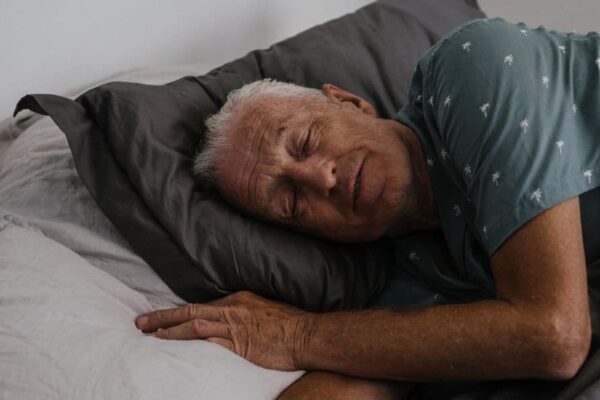
Irregular bedtimes increase the risk of developing conditions ranging from depression to bipolar disorder, data from 100,000 UK Biobank participants suggest.
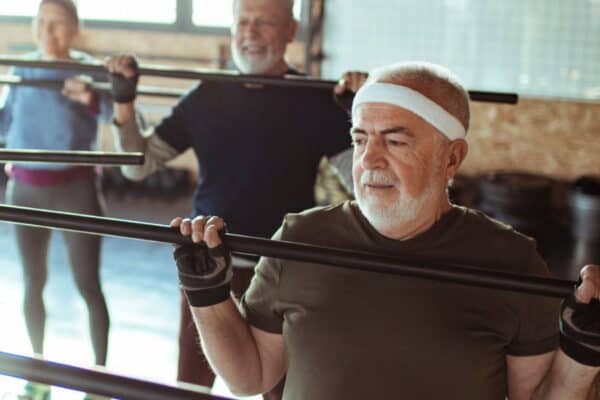
Risk calculator developed with data from 200,000 UK Biobank participants estimates someone’s likelihood of becoming ill from excess body fat.
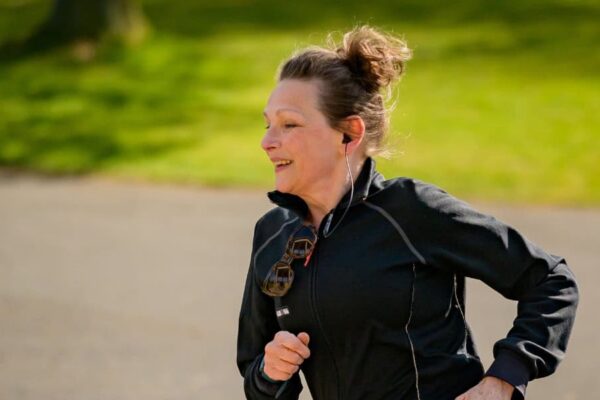
Data from more than 53,000 UK Biobank participants suggest that small improvements to sleep, diet and exercise have an outsized effect on heart health.
Brain regions responsible for memory and emotion are affected by menopause, brain scans from 11,000 UK Biobank participants suggest.
Explore our other data categories

Magnetic resonance images, bone-density scans, carotid artery ultrasound and more

Proteins, metabolites, infectious disease markers and other biomarkers
Genotyping, exome and whole-genome information

Linked electronic medical records, including hospital stays, cancer diagnoses and causes of death
Participants’ information on health and lifestyle collected via online or touchscreen questionnaires

Participants’ self-reported data on health and lifestyle

Derived data on participants’ environment, such as local air and noise pollution